Publicité

Publicité
Le nouveau roman de de Monak à lire absolument

jeudi 25 avril 2013

Le 9 avril en Tunisie


Des martyrs à l’indépendance

La « fête des martyrs » commémore les héros de la cause indépendantiste tunisienne, victimes de la fusillade par les forces françaises installées en Tunisie sous le régime du protectorat. Mais bien davantage encore : car ce jour du 9 avril 1938 à Tunis inaugurait le véritable engagement du mouvement national tunisien.   

Alors pourquoi le gouvernement provisoire actuel cherche-t-il à l’oblitérer depuis deux ans ? Pourquoi réprime-t-il ce symbole de la libération d’un peuple ? Justement au lendemain de la révolution de jasmin qui le délivrait du joug de la dictature ?

2013 : le cérémonial tabou
Il est des signes qui ne trompent pas sur la santé d’une nation. Amnesty International ainsi que la Ligue Tunisienne des Droits de l’Homme (LTDH) le notifient en en appelant à l’opinion mondiale pour dénoncer les abus d’un pouvoir qui en bafoue les principes légitimes. Le jour férié décrété national depuis 57 ans de constitution républicaine ne semble pas du goût des nouveaux potentats.


L’émergence d’une nation

Ces « événements » (sic) font des morts sous le Protectorat français. Le régime imposé à la Tunisie par la France depuis 1881 se caractérise par son impérialisme. Le Front Populaire « évoque en 1937 la possibilité d’accorder aux Tunisiens une certaine forme d’autonomie interne ». Sa chute verra les espoirs du Néo-Destour déchanter face à une Résidence générale devenue intransigeante. 


Suite à la grève générale du 8 avril 1938 et à la sommation à comparaître du militant Belhouane, la manifestation du lendemain, bastonnée dans un premier temps, se soldera par des émeutes réprimées à l’automitrailleuse au sortir de la médina de Tunis. 


Grève générale 38, devant la cathédrale  

Sont dénombrés officiellement 22 morts et 150 blessés face aux forces coloniales : gendarmes, policiers, zouaves (dont un poignardé). L’état de siège, décrété à Tunis, à Sousse et au Cap Bon s’accompagne de trois mille arrestations. Cinq ans de prison pour Bourguiba, à la tête du Néo-Destour, qui entre en clandestinité et radicalise sa lutte pour l’indépendance.


Une question de nationalisme

L’idée de modernisme n’est pas neuve en Tunisie. Elle flottait déjà chez les intellectuels avant la colonisation. Le Néo-Destour s’inscrivait dans cette mouvance ; ce n’est pas un hasard si l’identité tunisienne se démarquait du reste du monde arabe ; et  la dictature Ben Ali n’aurait jamais touché aux bases de la Constitution.

En cette treizième année du 21ème siècle, la société civile, les partis d’opposition ne cessent de rappeler cette identité nationale, promue par Bourguiba dès 1956. Elle devient dérangeante. En veut-on des preuves ? L’actuelle Assemblée Nationale Constituante (ANC) voudrait en effacer l’existence, jusqu’à celle  de son promoteur. Et les signes sont grossiers. Sa dernière statue, celle de son retour triomphal a subrepticement et récemment disparu.  Plus d’image du « Leader », plus de constitution républicaine ?
  
La Tunisie démocratique de Gauche

Que craint donc Ennadha, suite aux élections réfutées d’octobre 2011 qui l’asseyent au pouvoir ? Que la date symbolique du 9 avril ne soit l’occasion pour le peuple de désavouer le manque de considération dont sont l’objet les « martyrs » de la révolution de Jasmin ?  Que ne leur soit contestée l’exclusivité des principes rétrogrades renvoyant à la chariâa ; ainsi que leur alliance avec les états intégristes ou les groupuscules terroristes du Proche-Orient qui financent et appuient son intronisation et son maintien ?

Le crime politique et la négation de la démocratie

Dès le début de son exercice du pouvoir, Ennadha n’a cessé d’accumuler les erreurs tragiques. S’attaquant d’abord à l’intégrité corporelle, civique et sociale des femmes en voulant instituer la pratique de l’excision, comme du tutorat féminin : ce qui équivaudrait à la suppression du Code du Statut Personnel (ou code du droit des femmes : 1956).

Face au tollé général, n’a-t-il pas tenté de faire main basse par la force de ses milices armées sur les Universités, la presse et les Arts, les banques et les mosquées, n’hésitant pas ouvertement à faire des victimes ? Optant pour une stratégie plus discrète, s’adressant aux moins cultivés, n’a-t-il pas quadrillé des quartiers entiers, comme des villages excentrés, pour imposer un endoctrinement coranique relayé par des imams poussant à la haine et au jihad ?


La marche du Front populaire tunisien
N’a-t-il pas infiltré les différents ministères, comme les administrations de pions à sa solde ?  S’octroyant le luxe de prolonger leur mandat en toute illégalité ? N’a-t-il pas nommé des décideurs ignares et incompétents ? N’a-t-il pas établi une répression et une censure sans conteste ?

Enfin, n’en est-il pas parvenu à l’enlèvement, à l’incarcération, à la torture et à l’assassinat des opposants (Chokri Belaïd et d’autres encore… moins connus) ? S’arrogeant même le privilège de continuer à menacer la population de châtiments exemplaires !

Une cible à l’obscurantisme ?

N’est-il pas insidieux, voire humiliant, que ces soi-disant épris d’éthique se mettent à étaler sur les bancs de l’ANC les dessous de ces dames, et pas dans un style des « plus chics » (Cf. Gainsbourg-Birkin) ! C’était bien par-là qu’il fallait les dégrader, leur dénier tout soupçon d’intelligence et de suavité, en taxant l’intimité féminine de puanteur et en jouant les éboueurs !

Faire de la femme un objet d’abjection, c’était détourner toute une moitié de population (les hommes : chômeurs) des vrais problèmes de crise et jouer sur leur frustration ! Compte tenu du taux de réussite des jeunes filles, après la politique prioritaire de scolarisation entamée par Bourguiba, dans un contexte où, par coutume, les filles, sortant moins, réussissent mieux que les garçons !

La résistance artistique féminine
Car il faut bien dire qu’une association gouvernementale féminine avait été créée (dès 1956), ainsi qu’une fête officielle nationale (le 13 août). Il faut dire aussi que l’âge de la majorité avait été abaissé, alors que les imams islamistes veulent faire des femmes d’éternelles mineures.

Vers un cumul du non-droit ?

Pour toutes ces fausses raisons, au premier anniversaire de la fête des martyrs, suivant la révolution, les salafistes ciblent en priorité femmes, journalistes tunisiennes ou étrangères, dans le cortège de commémoration ! Traumatismes crâniens à la clé, les martyrs 2012 sont des sacrifiés à la cruauté et à la répression gratuites.

 « Cette année, la Tunisie s’apprête à commémorer un 9 avril singulier, où l’on commémore désormais, en sus de la Fête des martyrs, la dramatique répression violente du 9 avril 2012. Cette mise en abîme est aussi le résultat de l’immobilisme d’une commission d’enquête parlementaire impuissante et d’un ministère de l’Intérieur cultivant le secret ».
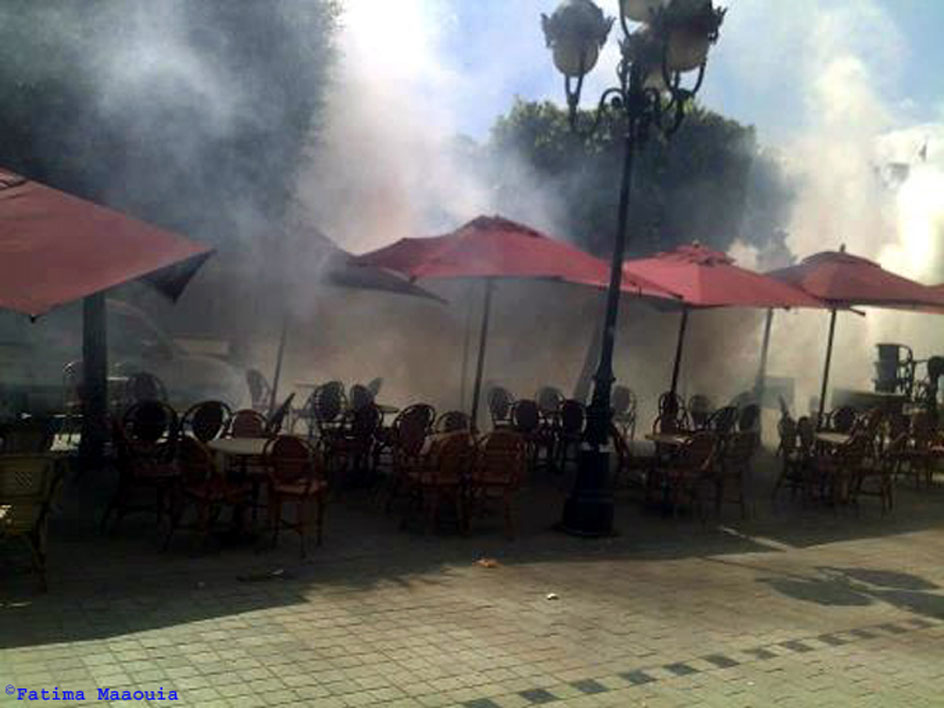
Les martyrs du saccage 2012

La Commission d’enquête sur les violences infondées reste systématiquement muette : les « ligues de protection de la révolution », labellisées salafistes, totalement hors-la-loi et totalement coupables et parfaitement « intouchables », sous la protection d’Ennadha.


La surenchère ou Ennadha discrédité

Le gouvernement Ennadha instaure la discrimination, dénoncée par l’actuel Front Populaire tunisien :  « Alors qu’il est censé, par sa fonction, représenter tous les tunisiens, le président provisoire de la République Tunisienne, Moncef Marzouki a déclaré à la chaîne Al-Jazeera, le 25 mars 2013 : «S’il vient à l’idée des extrémistes laïques de chercher à s’emparer du pouvoir, on dressera des potences et des guillotines et il n’y aura pas de sages, comme Moncef Marzouki, Mustapha Ben Jaafar ou Rached Ghannouchi pour prôner la modération, le dialogue ou la réconciliation nationale ».

Le pouvoir s’en prend au droit d’expression le plus basique, constate Hassiba Hadj Sahraoui, directrice adjointe du programme Moyen-Orient et Afrique du Nord d'Amnesty International : « Prononcer une interdiction générale des manifestations pour éviter d'avoir à faire aux manifestants est une infraction flagrante au droit international. Les agissements des forces de sécurité montrent bien qu'il est urgent de mettre en place une nouvelle législation qui protège le droit de manifester pacifiquement en Tunisie. »

La Tunisie du jihad
Le terrorisme intégriste est commandité par le gouvernement, souligne la LTDH : « La Tunisie a connu le lundi 9 avril 2012, journée de la fête nationale des martyrs, une journée noire pour les libertés, la démocratie et le respect des droits de l’Homme… Les forces de police, aidées par des milices, tenant les mêmes propos que des courants extrémistes et armées de barres de fer et de pierres, ont violemment chargé des manifestants pacifiques venus commémorer la fête des martyrs. Des journalistes bousculés, leurs matériels détruits, des députés de la Constituante, des représentants des partis et de la société civile, des vieux, des femmes, des jeunes ont été gazés par des lacrymogènes, souvent envoyés par des tirs tendus, et sauvagement agressés et copieusement insultés, certains par des groupes de miliciens sous le regard complaisant des forces de l’ordre. »


L’éradication des héros
Les conseils municipaux sont privés de leurs prérogatives. Menacés manu militari par le Ministère de l’Intérieur, ils doivent se soumettre au diktat de la théocratie. L’avenue « Chokri Belaïd », récent martyr politique pour ses idées de gauche, sera inaugurée « virtuellement » à Sidi Bou Saïd. Pas de plaque, mais un rassemblement témoigne de l’attachement de la Tunisie à ce grand humaniste politique. En présence de son épouse Besma Belaïd qui énoncera un discours poignant et militant.

L’indépendance, c’est pour demain ?

Malgré la discrimination communautariste que veut imposer le parti intégriste, la scission sociale que veut imposer Ennadha entre les partis hallal (autorisés parce qu’islamistes) et haram (interdits parce que laïques), la commémoration du 9 avril 2013 s’est effectuée dans une ville coupée en deux : la plus grande avenue de la capitale devient tabou pour le citoyen.

La jeune création cinématographique, elle, choisit son camp. Elle sort, après les événements du 9 avril 2012, un court métrage, intitulé « Bousculades, 9 avril 1938 », réalisé par Saoussen Saya et Tarek Khalladi. Il est diffusé aux Journées Cinématographiques de Carthage en novembre 2012.

« Bousculades » : les jeunes cinéastes s’engagent !
La résistance, l’indépendance est autant artistique que politique et juridique : la Tunisie a entamé sa révolte libertaire sur tous les fronts de la société… A l’avenir de lui donner raison.


Un article de Monak


          Tous droits réservés à Monak. Demandez l'autorisation de l'auteur avant toute utilisation ou reproduction du texte ou des images sur Internet ou dans la presse traditionnelle.


dimanche 21 avril 2013

Julien Gué and the theater


Is dream or duty?

In case you would have guessed, the theater is a commitment. A contract signed with this art of the living image. If Julien Gué chisels his plays in real objects of scenic pleasures, he favors the main: the relation to the public. The theater is act of transmission. Art of the communication, it has its requirements, as any job.

His work, his dream, it’s his fight –full stop! Artist’s reflex, it’s not without evoking, all the more in Polynesian islands Children of Paradise of Carné-Prévert (1943) tandem: both for its poetic treatment and for its intentions. Proposing a world where love is king, where “love links as act of resistance”. And it’s a very “declaration of love to the actors and the stage” which Julien Gué reveals, in his short passage on the television studio set of Polynesia 1st in Papeete.


Sounding the alarm at “Fare Ma’ohi” on 1st Polynesia
Such is the message thus delivered by Julien Gué. “Fare Ma’ohi” asked him: “What do you feel when you look over the Polynesian theater?” Julien Gué’s answer is professional.

A theater without story
“To shake the coconut palm” could be the title of this article, so much this allusion summarizes the dynamics in which occurs any creative act which respects itself and respects the public. So much the politics’ resolution is essential to anticipate, undertake the long-term and extend the tradition of the open-air spectacle. So much it seems harmful that the skills aren’t put in contribution and that the potential might be doomed to failure (or abortion).

On the one hand, it falls to the professionals to define the requisite prerogatives of their occupation. On the other one, management of the theatrical sector can be foreseen administratively only by including pedagogy, statutes and code of the employment.

To make the theater exists is to provide it with means, to rehabilitate the buried function of the traditional arioi, these ma’ohi actors forgotten nowadays in rubble of past. Make them go out of their forefathers’ museum; by structuring a domain which isn’t the “paradise”!
Theater, this elsewhere is not a Paradise
Jean-Marc Tera’ituatini Pambrun’s quotation, pulled from The Tree and The Dust (1992) would suit perfectly the comments of Julien Gué (by replacing “history” with “theater”); “Polynesian people have no history. This formula can seem sharp, but it’s just. People have a history when this one is the object of a systematic education in all the phases of the constituting individuals’ personal development.”

Julien Gué regrets that the theatrical art is tarnished and it’s confused with devalued entertainment or hobbyists’ leisure. The announcer seems to fall in the mistake formerly meant by Henri Hiro: be “démentalisé of his polynésianité” (for loss of one’s roots).

Already, his play Ariipaea-Vahine (1978), stemming from the Polynesian heritage, passed on by memory, illustrates the movement of cultural revival which he introduced before. Between myth and history, it looked like act of resistance at the time. It didn’t hold for a long time in the popular consciousness, due to the lack of orchestration by public authorities.

Henri Hiro and the theater ….“rementalisé"

In right line with Polynesian oral custom, with the pioneers of the exhumation of the theater, tuned to the high school students whom he trained and who could now live the scene and make it live, teachers with whom he collaborated, occasional actors who were hatched under his direction, Julien Gué is holder of these expectations which seem to find echoes everywhere else.
  
The stale culture
            To brush the panorama of the globalization of the culture, the report of this devaluation of the art propagates on all the continents: reduction of the state budgets for the culture, the administrative and fiscal harassments which fill the productions, the political corruption and the embezzlements, the invasion of the financial networks which blow a wind of commercial trifles and boss it wrongly or fiduciary the market, the theocratic ideologies which declare it taboo… the creation is much manhandled.

The almost world criterion of leisure and communication being broadcasting, the image trades are particularly worried. The creation, surprising and innovative by definition, is it so disturbing? Let us see how the spectators of the sequence of January 14th, 2013, “Fare Ma’ohi” signed, react. They don’t know each other; originate from different nationalities and cultures. They come from three continents: Africa, Europe, and Oceania. They filmed, they were filmed, they wrote.


Richard Bohringer “spills the beans”
Ta’ata Paskua comments so, hinting in Tahiti where he lives: “the territory is a real theater of the worst”. Indeed, the image vegetates, the image is frozen, afraid of a rise, the image is dying! (Either moving on stage, or livened: photography, audio-visual fields as the micro-short stories of Ta’ata). Would the fixed or livened up image be obliged to lock itself? Because the internet is harassed also, it’s a matter of information and its cell.

The only scenic image which is imperative is formatted: the advertising packs cross-posted by tons, misspend billions behind. Marketing tool, it boosts its worst purveyors. Easy, simplistic, within reach of brains the slowest, it piles up in the memory as a second nature. What’s its assessment? It multiplies in conditioned reflexes. What’s its recipe? The image is without smudge, tempting.

Theatricality of the ignorance, this ersatz of knowledge doesn’t cultivate the spirits: it restricts itself to a scrap of words matched by a jingle. It’s only filling the garbage dumps of the hobbies and the viewers’ bellies with chips, delicacies and flesh wrapped in slings of Misses.  

The smokescreen culture 
Why does it fascinate? It’s because its power of seduction maintains the confusion and holds in brief: the image-mirror… Many people believe they are a dream creature? A gesture, a look: the mimicry raises armies of mindless models.

The ragamuffins of the culture
The monopoly of the normative culture fails of “murdered Mozart” and of ranks of job-seekers qualified in actor’s job. In metropolitan France, provided with a unemployment-device, what does propose Pôle-Emploi in the column “professionals of the show”? …strippers, cover-girls, hostesses!!!
The cinema renews its market with up-to-date lighthouses-faces without taking big risks: because the editing erases the imperfections. At the theater, for getting across to the audience, the apprenticeship is primordial.
With Léo Caneri’s statements we are fully getting into intramural debate: the easy profit, its networks of privileged persons and its distribution. A French national theater, prospecting on Tahiti, inclined to promote the training and to move on to a show, noticed the lack on the subject and more still: Julien Gué’s role, his existence, his skills, his trainer’s route (high school diploma) were hidden to them during their stay in Papeete. It’s clear that, while saying the rivalry is acerbic, it’s not enough.


Léonore Caneri speaks about theater in Tahiti
Certain indelicacy spread on Facebook would erase him mindlessly of his direction of 2011: It snowed at Tuamotu. Photos, video reports of the rehearsals (August to December), press articles evoking what the comedians felt also, the broadcast interviews of the author of the initial tale: all that deny this kind of gossips!
From Spain, this echo reaches us: “Five minutes of speech about the theater for a cultural program, “it’s a little bit short, young man” (Cyrano de Bergerac)! We have the bad impression that the announcer would run the risk of losing her employ? A dialogue of the deaf, but the message passed! Besides, the framing, pitiful! The guest stuck in a pocket handkerchief! Fortunately, he is an actor, Julien Gué, you can see it, you can feel it! He didn’t feel disconcerting, he emitted the plights necessary! Material and human resources! Here, in our tiny village, we fast became disappointed. We retrained!”

“He’s right to step up to the plate: the quality is expected still when we pass at the box office! Drama schools make all the difference! In the Paris region (of my universities), too many troops are running after the rehearsal halls. The television restricts to broadcast often mediocre shows of renowned stars: to disgust you of the theater. Amateurs’ association it’s often anything: people indulge themselves with gags; it’s flat. Fortunately, some call on specialists! I knew that”, comments A.R., a teacher.

The lament of the theater
It seems the culture is either an act of resistance, the fight opened also in front of coercive powers (let us quote Brecht), or in a context of public slowness.
Ridha B. (ISAD): the theater of the disenchantment
In Tunisia, emerging nation, the theater established one of the priorities of the first president of the independent republic (1956). With the creation of the Secretarial Department of the Culture (1961), an interventionist system is set up, with the constitution of a “Commission of Orientation” which gives a visa or not (censures) for the dramatic works. Ten years later, he founds the Center of Dramatic Art, spent at the stage of Higher Institute (ISAD, 1981) with the academics first generation.

 Although the State censorship disappeared after the revolution of 2011, Ridha Boukadida, an actor, director, playwright and teacher in the Higher Institute of Dramatic Art of Tunis isn’t more optimistic than in his thesis (2003, The Tunisian theater in front of the modernity: the scene in an evolving society):


The culture hostage in Tunisia and somewhere else…
          “Today I think of the current event is in what we thought before the pseudo-revolution, of what we had always thought: the freedom is necessary for the emancipation of the individuals, the peoples and the theater.” 


“The Tunisian revolution was the incredible opportunity of the emergence of what this nation stored for centuries as ignorance, hypocrisy and opportunism. It’s after all the residue of Bourguiba’s period among the Tunisian women more than among the men that could save this tribe of 12 million inhabitants; otherwise, we’re sunk and good for a wahhabit medievalization…”

The opinion of the young Mediterranean generations underlines this achievement of a crucified culture. Early saddened, they change orientation (a recent immigrant Tunisian, a 4th generation of Algerian immigration Frenchwoman, a French-Tunisian).
 
They associate cultural mafia and State planned economy; no need to want to move forward other trainings that those imposed by the trust of the money; no need “to break through”, even if you are the best one.

And there, number of capitalist countries is going to recognize itself. The word “job” becomes synonymic of privilege and exploitation, the professional word amounts to “money pump” because the space of legal status doesn’t recognize criteria or falsifies them!


              Trained for nothing: the Maghreb-Mediterranean Sea voice
The three youngsters were organizers and left, because the job isn’t really nourishing. Both boys awarded a dancer diploma, have made scene (Tunisia for the oldest, Tunisia, France and Germany for the youngest- in theater, dance and cinema).

While insuring the daily bread, they resist by staying in shape to pass on their passion, when they have more free time to frame the youngest later, not by obligation, but by love.

An act of love
But, who is Julien Gué? Why does he support a part of his intervention on the Cultural Center Tjibaou and the professional status of the theater of New Caledonia?

Twenty five years previously, in a village of Languedoc-Roussillon (Mudaison, less than 2000 inhabitants), he livened a theatrical group outdone in 2nd Meetings of the Amateur theater of the region. What input do pull these actors, exercising at present in quite different domains? Must a director be trained? Is the actor Julien Gué on stage worth being seen and is worth the trip?


Marie, Séverine and Sylvie speak about Julien Gué
His arrival “by canary yellow cabriolet Triumph Spifire, wind-swept hair, very Rock’n’roll boho, electric deep blue-eyes… marks the beginning of an adventure” which starts with “the boards practice, the discovery of a subtle, lavish, rallying, expanding world, the familiarization with underestimated authors, the strength, the originality, the beauty of the language and the learning of whom we became”: the actors testify so today. “We were as in a bubble, inside ourselves, in perpetual vibration between the articulation (O sessions of diction!), the game, the partner, the truthfulness of the role… and the vast world.”

“The experiment was strong, we were addicts to: practical farces, playlets, singings, poetry. We lived on theater and Julien Gué lived it: passionate, poet, inborn-storyteller, with something of the childhood which continues and sublimates through the oral character. We were in apnea. It was the euphoria!”

“We crossed the bracket of our bell tower to reach our main part. As for a choral song, we were “in rise”. As in love relation, we were in absence of ourselves, at the same time alone, intensely us and in communion with the other one. We keep tracks, in the exercise of our occupations: we aren’t afraid of being; the other has one’s truth. We have been in good hands: generosity, acceptance and disinterest! The theater upsets, makes us change”

“Julien Gué offered us: “the luck to exist”

“On stage, we saw him in two totally contradictory characters (The Prophet and Schrischamtury at the Theater Iseion in Montpellier). Alone, he occupies brilliantly a stage platform of respectable sizes. We felt that his presence is enough to reduce the space, to inhabit it, to devour it. Julien Gué manages at once depth and weightlessness, somewhere else and closeness, a modulated, exciting constant energy, furthermore stirring; solar dimension affecting the innocence, atmosphere of serenity for the first one; contained violence and its overflowing, icy and ardent cruelty at the same time, character impressing everything with incandescence for the second; in summary, an ardor perfectly mastered and supported by his eyes’ twinkle; that seizes you, returns you, you are under influence.”


Outline of the theater of Julien Gué

In the same years in Paris, a spectator, “not very interested in theater”, for fear of having to face the supreme boredom of Julien soliloquizing, attests even so: “and there was the shock! At first I discovered a text, which I often read since. It was a little my roots. I remember that he played with a big sobriety. He didn’t play, in fact, he was this text. I remember that I was caught by this chap on stage: a single guy in front of a teapot, who told me the life.” (JS, Franco-Moroccan)

No longer need to prove that the job gives its full measure to the fascinating actors? Need to justify the theater and its practice? Do you know that from the hamlet of Missègre (66 inhabitants), the troop of Cultiv’actors (like “farm’actors”) comes to occur to Mudaison?

The advent of writing erased neither the need to mediate stories, nor to perform them. From the evenings of storytellers to the TV screen, the need to tell oneself remains pregnant. Griot or Jeu de la Feuillée, replaced by TV reality shows or the webcam interlude, stay substitutes in theses modes of identification, communication, cultural opening and check which proposes the theater.

Recognize oneself, fall and stand back: a job named theater. 

An article of Monak
Translated from French by Monak


*Drama course Monak: license - theater Paris III-Sorbonne, 3rd degree Dance and creativity (Paris VI), modulate theater and teaching. Actor and technician Workshops (80-90 ): Theatre de Poche: G. Cambreleng-M. Barré, J-P Sarrazac (Nanterre), J. Lassalle, Colin Harris, Theatre Mouvant, Roy-Hart-Theatre, El Hamra, ISAD-Tunis, Lotfi Dziri, Cécile Backès. Freelance: Theatre Organique, Arts and Cultures, L’Etoile du Nord, Théâtre de la Danse and Centre Chorégraphique Méditerranéen (since 96 to now).
     
          Copyrights Monak and Julien Gué. Ask for the authors’ agreement before any reproduction of the text or the images on Internet or traditional press.

mardi 16 avril 2013

Sur l'île de Pâques, le festival de tous les superlatifs


Le Tapati Rapa nui

Tous les ans, vers le mois de février a lieu le Tapati Rapa Nui, le festival annuel de l'île de Pâques. Une manifestation hors normes dans un cadre unique au monde.

Tous les ans, depuis 1968, la minuscule et mythique Île de Pâques se transforme en un lieu magique que seuls quelques centaines de privilégiés ont la chance de fréquenter à cette période précise.

Rapa Nui, une île minuscule à l’immense rayonnement
Chaque année c’est la même chose : il n’y a plus une seule place d’avion ni un seul lit disponibles quasiment un an à l’avance sur l’île de Pâques pour la période du Tapati.

Qu’est-ce qui peut bien faire l’incroyable succès de cette manifestation perdue au milieu du Pacifique Sud ?


Le Tapati Rapa Nui, bien plus qu’un festival

Chaque début d’année donc, depuis plus de quatre décennies, l’île de Pâques se transforme en un immense terrain de jeux entièrement dédié à la mémoire, à la culture et à la tradition pascuanes. Ces jeux sont avant tout un moyen de transmettre la culture Rapa Nui en s'amusant.

Les Moaï, impassibles, attendant la fête...
Sous le regard éteint mais bienveillant des Moai silencieux, la population de l’unique village de Rapa Nui se divise en deux camps opposés, chacun d’entre eux étant représenté par une jeune fille à qui les compétiteurs doivent ramener un maximum de points en participant à des épreuves traditionnelles.

La candidate du clan gagnant est élue reine de l’île pour l’année à venir.

Autour des épreuves proprement dites se déroulent de nombreux concours en tous genres mettant en valeur savoirs faire et talents des uns et des autres :

Parmi toutes celles-ci, laquelle sera reine ?...
Mais ce qui passionne surtout les spectateurs privilégiés et occupe la population les onze autres mois de l'année, ce sont bien les épreuves qui désigneront la reine de l'île pour l'année à venir.


Le triathlon du Tapati Rapa Nui

Parmi les nombreuses joutes traditionnelles qui opposent les deux camps rivaux pendant près de deux semaines, certaines sont uniques au monde et particulièrement spectaculaires.

Tout d’abord, le "Ta'ua Rapa Nui" : il s'agit d'un triathlon très particulier.

Les trois épreuves de ce triathlon hors normes se déroulent dans le cadre somptueux et sacré du volcan Rano Raraku, qui domine toute l’île.

Au départ de la première épreuve du Ta’ua Rapa Nui
La première de ces épreuves consiste à traverser dans sa plus grande longueur la lagune formée par le cratère sur une sorte de barque faite de roseaux séchés.

La seconde est une course à pieds tout autour du lac, sur ses rives d’abord, puis sur les hauteurs des flancs du cratère. Rien d’extraordinaire me direz-vous. Et bien si, car il faut réaliser cela avec un régime de banane sous chaque bras!

La course autour du lac du volcan Rano Raraku
Pour terminer, les athlètes doivent de nouveau traverser le lac. Mais cette fois, c’est juché sur une sorte de planche de surf en roseaux qu’ils doivent le faire.


Haka Pei : la luge façon pascuane

La plus spectaculaire de toutes les épreuves du "Tapati Rapa Nui" est incontestablement celle du Haka Pei. C’est aussi, et de très loin, la plus dangereuse.

Il faut d’abord escalader les pentes du volcan Maunga Pu’i avec sa "luge" sur le dos.

Le Haka Pai : A plus de 80km/h sur les flancs du Maunga Pu’i…
Ces luges sont, en réalité, des sortes de planches grossières réalisées en liant des troncs de bananiers entre eux.

Une fois au sommet, les compétiteurs, allongés sur le dos, doivent dévaler le plus vite possible le flanc herbu et caillouteux du volcan en se cramponnant tant bien que mal à leurs engins. Les plus rapides, et sans nul doute les plus téméraires, atteignent 80 km heure.


Tapati Rapa Nui, le ciment d’un peuple

Si le festival de Rapa Nui est un incontestable apport économique pour toute la population de l’île, il joue aussi, et peut-être surtout, un rôle social majeur.

Mais que de travail toute l’année pour en arriver là…
En effet, au-delà des deux semaines de festivités jalonnées de festins sans fin, de spectacles et de concerts, les préparatifs s’étalent quasiment sur toute l’année. Ils impliquent de savantes recherches et réflexions sur le passé du peuple Rapa Nui, sur son histoire et sa culture.

Ainsi, au travers de l’énorme travail que représente la préparation de cette manifestation unique au monde, c’est tout un savoir ancestral qui est redécouvert, mis en valeur, et donc préservé.

Le Tapati Rapa Nui sous toutes ses facettes
Ces longs préparatifs permettent également de renforcer le lien qui unit entre eux les Pascuans, lien indispensable à la survie d’une communauté humaine aussi isolée que peut l’être celle de l’Île de Pâques.

Très loin de tout, Rapa Nui n’est pas facile d’accès et le voyage pour s’y rendre est, pour le moins, compliqué et onéreux. Toutefois, ne vous y trompez pas : assister au "Tapati Rapa Nui" est bien le voyage d’une vie.


Un article de  Julien Gué


Tous droits réservés Julien Gué. Demandez l'autorisation de l'auteur avant toute reproduction du texte ou des images sur Internet ou dans la presse traditionnelle.

A lire également sur ce blog :

Petite histoire de l'île de Pâques

Mystérieux Moaï de l'île de Pâques